Welcome to NeuroLacto!
Payam Seyedkalateh
Payam Seyedkalateh
Payam Seyedkalateh
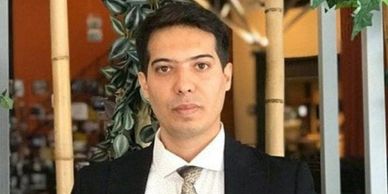
MSc, Founder of Clinical Research
Speech and Language Pathology
I am Payam Seyedkalateh, a speech-language pathologist specializing in neonatal feeding and sucking disorders for over eight years. Early in my clinical career, I recognized that newborn feeding disorders cause severe family stress and trigger long-term risks in communication, motor coordination, and neurodevelopment.
Driven to solve this, I envisioned a world where neonatal feeding screening is as routine and accessible as newborn hearing screening.
To bridge this gap, I initiated the development of NeuroLacto AI. Backed by a multidisciplinary team of core researchers, we developed an objective assessment technology to screen neonatal sucking function from the first days of life. Our system empowers healthcare professionals with rapid, accurate data to enable timely, life-changing interventions.
Our vision is global: to transform preventive developmental healthcare so every newborn gets a healthy start.
Our Mission
- Protecting Potential: Early detection safeguards long-term neurodevelopment.
- Empowering Clinicians: Advanced technology built to support clinical wisdom.
- Global Access: Ensuring every newborn, everywhere, has access to early feeding care.
Elnaz Pooralijani
Payam Seyedkalateh
Payam Seyedkalateh
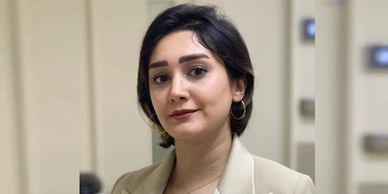
MSc, Founder of Maternal-Neonatal Research
Midwife & Midwifery Counselor
I am Elnaz Puralijani, a midwife with a Master’s degree in Midwifery Counseling and over eight years of clinical and educational experience in maternal and neonatal health. Throughout my career, I have closely supported women during pregnancy and breastfeeding, witnessing firsthand the complex challenges mothers face—especially around infant feeding.
I believe that breastfeeding difficulties cannot be solved by simple advice alone; they require accurate, evidence-based guidance and professional reassurance. My clinical work focuses on empowering mothers with proper breastfeeding techniques, optimal positioning, breast care, and the management of feeding difficulties to build their confidence and security.
Driven by this mission, I joined the NeuroLacto team during its foundational stages to collaborate on the development of the project. My primary objective is to ensure that our technology is not only innovative but also clinically precise, evidence-based, and directly aligned with the real needs of mothers and newborns.
In my role as Lead Maternal-Neonatal Researcher, I direct the clinical orientation of the project, refine the system from a maternal care perspective, oversee neonatal assessment testing, and supervise the clinical studies required for rigorous scientific validation.
My ongoing mission is to integrate clinical midwifery expertise with innovative technology to enable precise feeding assessments, strengthen clinical decision-making, and create a safer, more reassuring breastfeeding journey for families..
Navid Nasiri
Payam Seyedkalateh
Navid Nasiri
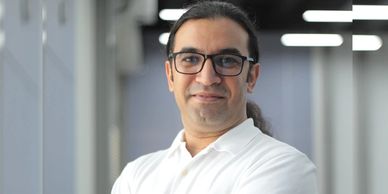
PhD Candidate, Founder of Technical, AI Research and Systems Engineering
Electronics & Intelligent Systems Specialist
I am Navid Nasiri, a PhD candidate in Electronics at Sultan Qaboos University, specializing in artificial intelligence, embedded systems, robotics, and renewable energy technologies. Over the past decade, I have worked at the intersection of hardware design, intelligent systems, and engineering, leading research and industrial projects across AI, IoT, drones, and energy systems.
Throughout my career, I have designed and built more than 200 electronic and electromechanical systems, developed AI-based monitoring platforms, and led large-scale technical implementations. My work combines deep technical expertise with practical execution, transforming complex research concepts into deployable, real-world engineering solutions.
Driven by this passion, I joined NeuroLacto during its foundational stages to translate advanced signal processing, machine learning, and embedded intelligence into a clinically meaningful tool for neonatal assessment. In my role as Lead AI and Systems Engineer, I design the technical architecture of NeuroLacto, from hardware sensing systems to AI model development and full system integration.
I oversee algorithm development, data modeling, system optimization, and product engineering. My objective is to ensure that the NeuroLacto platform is scientifically robust, scalable, reliable, and perfectly optimized for clinical environments.
My ongoing mission is to bridge engineering innovation with maternal and neonatal healthcare, building intelligent systems that enhance clinical precision, reduce uncertainty, and support better outcomes for newborns and families.