Effect of sequential swallow training programme on feeding
TRANSITION AND SUCK-SWALLOW-BREATH COORDINATION IN PRETERM INFANTS
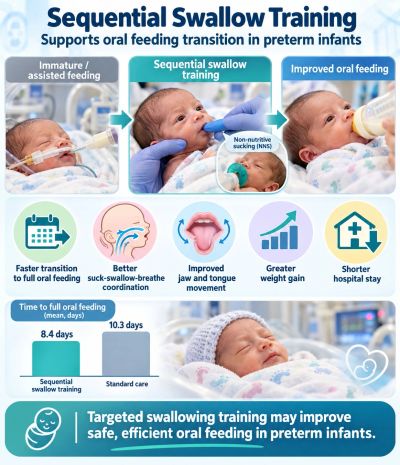
This clinical study investigated whether a structured sequential swallow training program could improve the transition to oral feeding and feeding-related coordination in preterm infants. The study included 120 preterm infants, with 60 infants receiving the sequential swallow training program and 60 receiving non-nutritive sucking as a comparison intervention. Feeding performance and suck–swallow–breath coordination were assessed during the transition to oral feeding.
The findings showed that infants who received sequential swallow training achieved full oral feeding more rapidly than those in the comparison group. The transition period was significantly shorter in the intervention group, with infants reaching full oral feeding in approximately 8.4 days compared with 10.3 days in the non-nutritive sucking group. The intervention group also demonstrated greater weight gain and a shorter hospital stay.
Assessment of oral feeding performance showed improvements in feeding readiness and sucking function following the intervention. The training was particularly associated with better jaw and tongue movements and improved coordination of sucking and swallowing, while both intervention approaches were associated with improvements in physiological stability during feeding.
Overall, the study highlights the potential value of structured swallowing and oral-motor training in supporting preterm infants during the transition from immature or assisted feeding to independent oral feeding. These findings reinforce the importance of early identification of feeding difficulties and targeted interventions to support safe, efficient oral feeding and successful progression toward full oral nutrition in the neonatal intensive care setting..
Dietary transition difficulties in preterm infants: critical
CRITICAL LITERATURE REVIEW
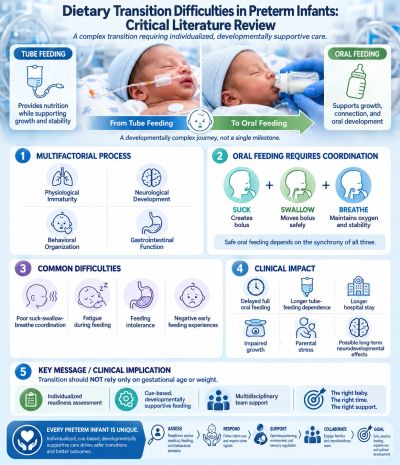
This critical literature review examined the challenges associated with the transition from tube feeding to full oral feeding in preterm infants. The study synthesized existing evidence to better understand the factors influencing feeding progression and the difficulties commonly encountered in neonatal care.
The findings showed that dietary transition in preterm infants is a complex and multifactorial process influenced by physiological immaturity, neurological development, behavioral organization, and gastrointestinal function. Successful progression to oral feeding requires coordination of sucking, swallowing, and breathing, which is often underdeveloped in preterm infants.
The review highlighted several common difficulties, including poor suck–swallow–breathe coordination, fatigue during feeding, feeding intolerance, and negative early feeding experiences. These challenges can lead to delayed achievement of full oral feeding, prolonged dependence on tube feeding, and increased length of hospital stay.
In addition, feeding difficulties were associated with broader consequences such as impaired growth, increased parental stress, and potential impacts on long-term neurodevelopment. The study emphasizes that feeding transition should not be based solely on gestational age or weight, but rather on individualized assessment of infant readiness and capabilities.
Overall, the review concludes that dietary transition in preterm infants requires a developmentally supportive and individualized approach. Early identification of feeding difficulties and the use of cue-based and multidisciplinary strategies are essential to improve feeding outcomes and optimize neonatal .
Instruments and Indicators for the Assessment of Oral ...
Feeding Skills in Preterm Infants (2024–2025 Review)
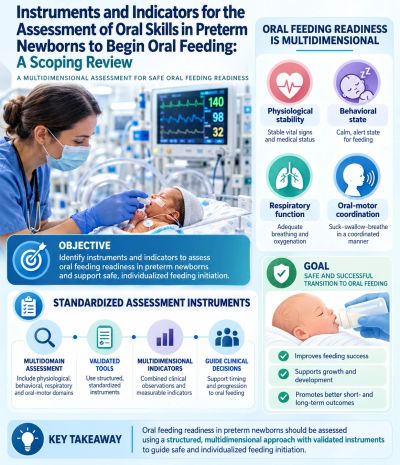
This systematic review evaluated the available tools and clinical indicators used to assess oral feeding skills and readiness in preterm infants. The study analyzed multiple research papers to identify how clinicians determine when infants are prepared to begin and progress with oral feeding in neonatal care settings.
The findings showed that oral feeding readiness is a multidimensional concept influenced by several factors, including physiological stability, behavioral state, oral-motor coordination, and respiratory function. The review identified a range of assessment tools and scoring systems designed to evaluate these components, such as structured clinical scales and observational methods used in NICUs.
However, the results also highlighted significant variability across studies in terms of assessment criteria and measurement approaches. No single standardized tool was consistently used across clinical settings, indicating a lack of universal consensus on how to objectively assess feeding readiness.
Overall, the study emphasizes that while multiple assessment methods are available, there is still a need for more standardized, reliable, and objective tools to evaluate oral feeding readiness in preterm infants. These findings support the importance of developing consistent assessment frameworks to improve feeding outcomes and guide clinical decision-making in neonatal care.
[8] https://www.sciencedirect.com/science/article/pii/S1355184124001674
Oral Feeding Readiness and Premature Infant Outcomes
This clinical study examined how oral feeding readiness in preterm infants is associated with feeding outcomes and overall clinical progression. The researchers evaluated infants’ readiness for oral feeding based on physiological stability, behavioral state, and early oral-motor cues before initiating feeding.
The findings showed that infants who demonstrated higher levels of feeding readiness achieved full oral feeding more quickly and had a more efficient transition from tube feeding. These infants also tended to have shorter hospital stays, indicating that early readiness is closely linked to improved clinical outcomes.
In contrast, infants with lower readiness levels experienced delayed progression to independent oral feeding and required longer periods of supportive feeding interventions. The study emphasizes that initiating oral feeding based on the infant’s readiness—rather than a fixed schedule—can lead to better feeding success and overall outcomes.
Overall, the study highlights that assessing oral feeding readiness is a critical step in the management of preterm infants, supporting safer feeding initiation, improving feeding efficiency, and contributing to improved neonatal care outcomes.
[7] https://www.sciencedirect.com/science/article/pii/S1355184118301315
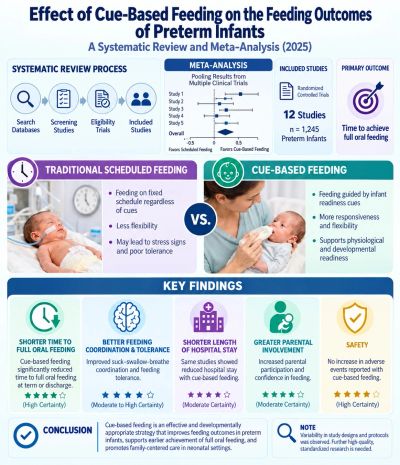
Effect of Cue-Based Feeding on the Feeding Outcomes of
... Preterm Infants: A Systematic Review and Meta-Analysis (2025).
This systematic review and meta-analysis evaluated the effectiveness of cue-based feeding in improving feeding outcomes among preterm infants. The study synthesized findings from multiple clinical trials to assess whether feeding guided by infant readiness cues leads to better outcomes compared to traditional scheduled feeding approaches.
The results showed that cue-based feeding was associated with a significantly shorter time to achieve full oral feeding, indicating a more efficient transition from tube feeding to independent feeding. Infants in the cue-based feeding groups also demonstrated improved feeding tolerance and coordination, reflecting better alignment between feeding practices and the infant’s physiological readiness.
In addition, some studies included in the analysis reported reduced length of hospital stay and greater parental involvement in the feeding process, suggesting broader clinical and developmental benefits of this approach. However, the authors noted variability in study designs and intervention protocols, highlighting the need for further high-quality, standardized research.
Overall, the study provides strong evidence that cue-based feeding is an effective and developmentally appropriate strategy for supporting feeding progression in preterm infants, reinforcing its role as a valuable approach in neonatal care settings.
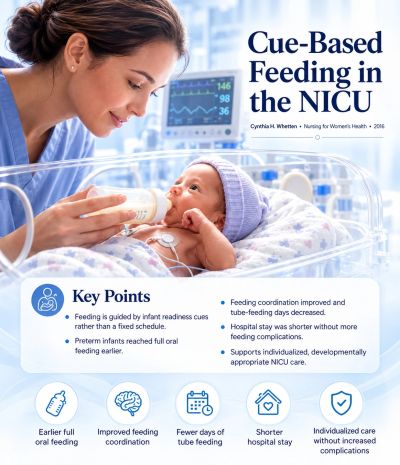
Cue-Based Feeding in the NICU
This clinical study investigated the impact of cue-based feeding—an approach in which feeding is guided by the infant’s behavioral and physiological readiness—on feeding outcomes in preterm infants in the NICU. Instead of following a fixed feeding schedule, caregivers adjusted feeding times based on the infant’s cues such as alertness, hunger signals, and stability.
The findings showed that infants managed with cue-based feeding achieved full oral feeding earlier compared to those receiving traditional scheduled feeding. They also demonstrated improved feeding coordination and required fewer days of tube feeding, indicating more efficient progression toward independent feeding.
In addition, cue-based feeding was associated with shorter hospital stays, suggesting that aligning feeding practices with the infant’s readiness can positively influence overall clinical outcomes. Importantly, this approach supports more individualized care without increasing feeding-related complications.
Overall, the study highlights that recognizing and responding to infant feeding cues can significantly enhance feeding development in preterm infants, supporting a more efficient and developmentally appropriate transition to oral feeding.
Oral stimulation accelerates the transition from tube to ora
This study investigated whether oral stimulation could improve feeding performance in preterm infants and accelerate the transition from tube feeding to independent oral feeding.
Preterm infants received a structured oral stimulation program involving gentle stimulation of the lips, tongue, and oral muscles before feeding. Their feeding progress was then compared with a control group receiving standard care.
The results showed that infants who received oral stimulation transitioned to full oral feeding significantly earlier than those in the control group. They also demonstrated improved sucking organization and coordination, which are essential for effective feeding.
Importantly, the intervention did not increase stress or adverse effects, indicating that it is a safe and beneficial approach in clinical settings.
Overall, the study highlights that targeted oral stimulation can enhance oral-motor function, improve feeding readiness, and reduce dependence on tube feeding in preterm infants.
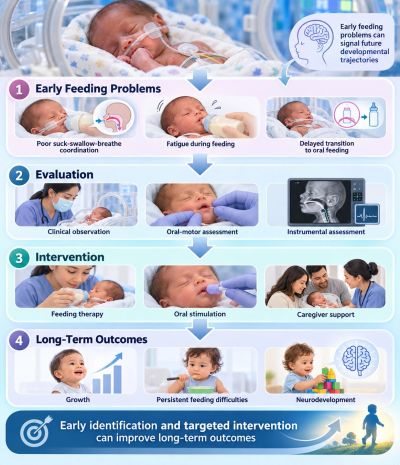
Feeding Problems and Long-Term Outcomes in Preterm Infants-A
This review examines feeding difficulties in preterm infants and their potential impact on long-term developmental outcomes. It emphasizes that feeding problems in early life are often linked to immature neurological and oral-motor systems, as well as medical complications associated with prematurity.
The study highlights that early feeding difficulties—such as poor sucking coordination, fatigue during feeding, and delayed transition to oral feeding—can be associated with long-term challenges, including growth issues, persistent feeding disorders, and delays in neurodevelopment.
It also outlines a systematic approach to evaluation, stressing the importance of multidisciplinary assessment, including clinical observation, oral-motor evaluation, and when needed, instrumental assessments.
Early identification and targeted interventions—such as feeding therapy, oral stimulation, and caregiver support—are essential to improve both short-term feeding success and long-term developmental outcomes.
Overall, the study underscores that feeding problems in preterm infants are not only immediate clinical concerns, but also important indicators of future health and developmental trajectories.
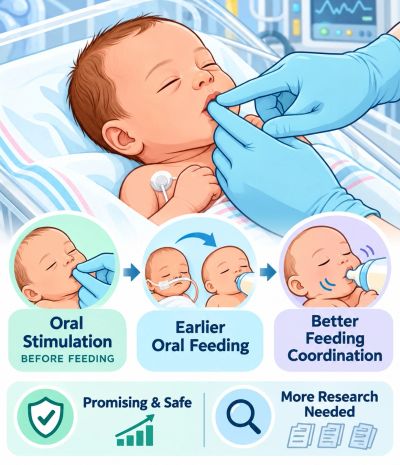
Oral stimulation for promoting oral feeding in preterm infan
This Cochrane systematic review evaluated the effectiveness of oral stimulation interventions in promoting oral feeding in preterm infants.
The analysis included multiple clinical trials assessing structured oral stimulation techniques, such as gentle stimulation of the lips, tongue, and oral structures before feeding.
The findings suggest that oral stimulation may reduce the time required to achieve full oral feeding and may also help infants transition more quickly from tube feeding to independent feeding. Some evidence also indicates potential benefits in improving feeding coordination and efficiency.
However, the review notes that the overall quality of evidence varies across studies, and further high-quality research is needed to confirm the extent of these benefits.
Overall, the study supports oral stimulation as a promising and safe intervention to support feeding development in preterm infants, while highlighting the need for continued research in this area.
Neonatal Therapy Interventions Supporting Oral Feeding Skill
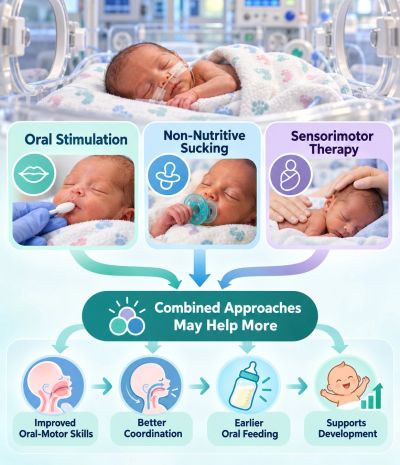
This systematic review evaluates a range of neonatal therapy interventions aimed at improving oral feeding skills in preterm infants. It focuses on therapies such as oral stimulation, non-nutritive sucking, and sensorimotor interventions designed to enhance feeding readiness and coordination.
The findings suggest that these interventions can support the development of oral-motor skills, improve suck–swallow–breath coordination, and help preterm infants achieve independent oral feeding earlier.
The review also highlights that combining different therapeutic approaches may lead to better outcomes compared to single interventions alone. However, variability in study designs and intervention protocols indicates a need for more standardized research.
Overall, the study emphasizes that targeted neonatal therapies play a crucial role in supporting feeding development in preterm infants and can improve both short-term feeding outcomes and overall developmental progression.